

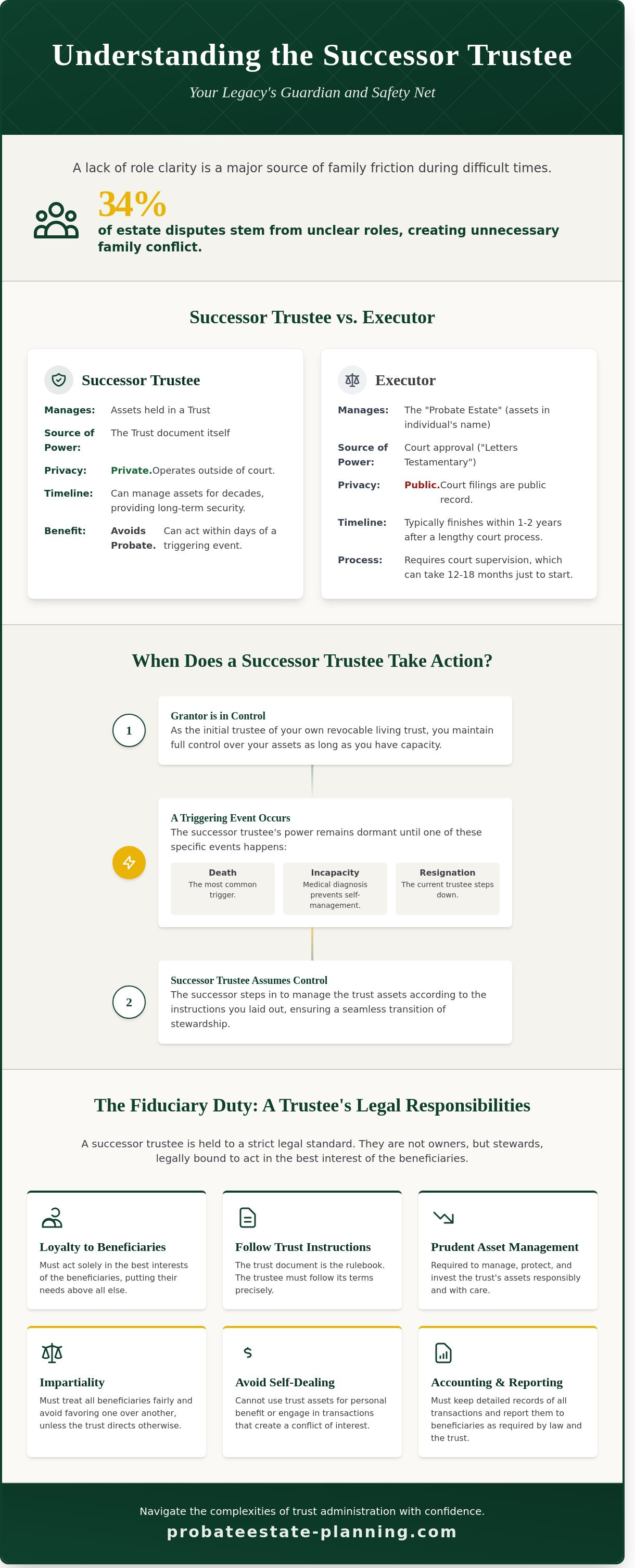
On a Tuesday morning in October, a family in Charlotte discovered that having a trust document isn't the same as knowing how to manage it. When their father passed away, the siblings realized they couldn't distinguish between the duties of an executor and the person responsible for the trust's long-term assets. You might find yourself in a similar position, wondering exactly what is the successor trustee and whether you're prepared for the legal weight of that title. It's a heavy burden to carry, especially when you're trying to maintain family harmony. A 2023 review of estate disputes found that 34% of family conflicts stem from a simple lack of role clarity.
We understand that the fear of making a financial error or sparking a family feud is real. You want to honor your loved one's legacy without ending up in a courtroom. This guide provides the clarity you need to step into this role with confidence. We'll define your legal duties across North Carolina, South Carolina, Maryland, and Tennessee, ensuring you protect your family's future from unnecessary risk. You'll learn the specific triggers that transfer power to you and get a practical checklist of immediate steps to keep the estate secure and your liability low.
Key Takeaways
- Gain a clear understanding of what is the successor trustee and how they act as a protective guardian for your assets and your family's future.
- Identify the specific legal triggers that transition authority to your chosen steward, ensuring your protection remains uninterrupted during times of transition.
- Learn about the strict fiduciary duties that safeguard your beneficiaries and keep your estate plan compliant with complex state-specific laws.
- Evaluate the strategic choice between family members and corporate trustees to preserve long-term harmony and maintain financial precision.
- Discover how professional legal guidance provides the necessary shield to navigate the complexities of trust administration with quiet confidence.
Defining the Successor Trustee: Your Legacy's Safety Net
Planning for the future often brings up a difficult question: who will look after your family when you no longer can? Understanding what is the successor trustee is the first step in building a plan that prevents chaos. A successor trustee is a fiduciary responsible for managing assets according to the grantor's specific instructions. This individual or professional entity doesn't have authority immediately. Instead, they wait in the wings while you, the grantor, manage your own affairs as the initial trustee.
Your revocable living trust remains under your total control as long as you have capacity. The successor only steps into the light when a specific triggering event occurs, such as your death or a medical diagnosis that leaves you unable to make decisions. By naming this person now, you ensure that your home, bank accounts, and investments transition to a trusted hand without a single day of interruption. This role is a pillar of stewardship, designed to protect your life's work from mismanagement or court interference.
The Successor Trustee's Role Within a Revocable Living Trust
The trust document functions as a comprehensive rulebook for your successor. It outlines exactly how assets should be managed, when distributions should be made to children or grandchildren, and what expenses can be paid. It's vital to distinguish between stewardship and ownership. While the successor trustee has legal title to the property, they don't own it for their own benefit. They're legally bound to act in the best interests of your beneficiaries, following the roadmap you've laid out.
This structure offers a level of flexibility that the probate court simply cannot match. In Maryland, for example, the probate process can stretch between 12 and 18 months for even moderately complex estates. A successor trustee, however, can often begin paying bills and managing property within days of your passing. This speed preserves the value of your assets and provides immediate financial support to your loved ones.
Successor Trustee vs. Executor: Key Differences in the Southeast
Many families in the Southeast confuse the role of an executor with what is the successor trustee. While you might appoint the same person for both jobs, the legal boundaries are distinct. An executor is responsible for the "probate estate," which includes assets held in your individual name. They must answer to a judge and file public inventories of your belongings. In contrast, the successor trustee manages only the assets titled in the name of your trust, operating entirely outside the courtroom.
- Privacy: In North Carolina and Tennessee, trusts remain private documents. This means your neighbors and the general public cannot see what you owned or who received it.
- Authority: An executor's power is granted by the court through "Letters Testamentary," a process that can take weeks. A successor trustee's power comes directly from your trust document.
- Duration: Executors typically finish their work within a year or two. A successor trustee might manage a child's inheritance for decades, ensuring long term financial security.
Choosing the right person for this role isn't just about financial literacy; it's about choosing someone who understands your values. Whether you select a family member or a professional trust company, this person will be the guardian of your family's harmony during their most vulnerable moments.
When Does a Successor Trustee Take Action? Triggers and Transitions
Understanding what is the successor trustee starts with knowing they don't have power immediately. Their authority remains dormant until a specific "contingency" occurs. This structure protects the grantor's autonomy while ensuring a seamless transition of stewardship when life changes. If you're currently managing these transitions, you might find our guide to estate planning essentials helpful for clarifying your next steps.
The transition usually happens in three specific scenarios. First, the death of the grantor is the most frequent trigger. Second, a successor steps in if the primary trustee resigns or is simply unwilling to serve. Finally, the most complex trigger is the grantor's incapacity. This allows the successor to manage affairs while the grantor is still living, ensuring bills are paid and medical needs are met without interruption.
Navigating Grantor Incapacity in Maryland and South Carolina
In Maryland and South Carolina, determining incapacity isn't a casual observation. Maryland law often requires evidence that a person cannot manage their property effectively due to physical or mental disability. Usually, the trust document requires written certifications from two licensed physicians before the successor can act. This process is vital. It allows the family to maintain privacy and control, effectively avoiding the need for a court-ordered guardianship. This private transition saves families from the public oversight and the 5% to 10% in administrative costs often associated with court-supervised proceedings.
The First 30 Days: Steps to Take After the Grantor Passes
When the grantor passes away, the successor's role shifts from standby to active management. The first 30 days are a whirlwind of responsibility. To prove authority to banks and title companies, the successor must obtain multiple certified death certificates. In North Carolina, NC GS § 36C-8-813 mandates that the trustee keep beneficiaries informed about the trust's administration. This isn't just a courtesy; it's a legal requirement to provide notice within 60 days of the trust becoming irrevocable.
Securing assets is the immediate priority. Whether it's a family home in Charlotte or a rental property in Nashville, the successor must ensure the property is insured and protected. This might involve changing locks, notifying insurance carriers, or collecting mail. By acting decisively, the successor prevents the chaos that often follows an unplanned transition. Understanding what is the successor trustee means recognizing this person as the steady hand that preserves a family's legacy during its most vulnerable moments.
Fiduciary Duties and Legal Responsibilities of a Successor Trustee
Understanding what is the successor trustee involves more than just reading a title; it requires embracing a high legal standard known as fiduciary duty. This mandate requires you to put the beneficiaries' needs above your own interests at all times. You aren't just a manager. You're a steward of a family's legacy. This responsibility is the highest duty recognized by the law, demanding total integrity and transparency throughout the administration process.
The duty of loyalty is a central pillar of this role. It strictly prohibits you from using trust assets for personal gain or "self-dealing." If the trust owns a mountain cabin in South Carolina, you cannot live there rent-free or sell it to yourself for less than fair market value. Alongside loyalty is the duty of impartiality. You must treat every beneficiary fairly, regardless of your personal relationship with them. If one sibling is difficult to work with while another is your best friend, the law still requires you to follow the trust's instructions without bias. A trustee can be held personally liable in court for "breach of fiduciary duty" if they fail these standards.
Asset Management and Protection Standards
Your first task involves creating a detailed inventory of every trust asset. You'll need to locate everything from 100 shares of blue-chip stocks to a 1968 classic car kept in a garage. In Maryland and Tennessee, you must follow the "Prudent Investor Rule." This legal standard, found in Maryland Code § 15-114 and Tennessee Code § 35-14-103, requires you to manage investments with the same care a cautious person would use for their own funds. You must also verify that all real estate is properly insured and that property taxes are paid before the December 31st deadline to avoid penalties and preserve the home for the next generation.
Distribution and Beneficiary Communications
Clear communication is the best way to maintain family harmony. You're responsible for following the specific distribution schedule the grantor created. Some trusts require a total lump sum payout, while others mandate installments, such as 25% of the principal at age 30 and the remainder at 35. You'll provide regular accounting reports to beneficiaries to show exactly how much money is in the accounts and what expenses were paid. If the trust allows for "discretionary" distributions, you'll use your judgment to approve or deny requests for health, education, or support. This might mean deciding whether to pay a $55,000 college tuition bill or a beneficiary's emergency medical debt. By acting with transparency, you protect the family's peace of mind and your own legal standing.
Selecting the Right Successor: Family Members vs. Corporate Trustees
Choosing the individual or entity to manage your legacy is a decision that carries profound weight. You're not just picking a name; you're deciding who will protect your family's harmony when you aren't there to mediate. Understanding what is the successor trustee involves evaluating the specific skills and temperaments of your candidates against the complexity of your assets. It's about finding a balance between personal connection and administrative competence.
Many parents naturally look to their eldest child for this role. While this feels like a vote of confidence, it often creates friction. Research from the Williams Group indicates that 70% of family wealth transfers fail due to a breakdown in communication and trust among heirs. If you name one child over another, you might inadvertently spark a lifelong rivalry. Trusted friends offer a neutral perspective, yet they may struggle with the 40 or more distinct administrative tasks required to settle a trust. Corporate trustees, such as banks or trust companies, bring institutional experience. They provide professional management and zero emotional bias, though they typically charge annual fees ranging from 1.0% to 1.5% of the trust's value.
Always name at least one alternate successor. If your first choice is unable to serve at the time of your death or incapacity, your plan could stall in court. A backup ensures the stewardship of your estate continues without interruption, preventing the very chaos you're trying to avoid.
Common Pitfalls in Trustee Selection
Avoid the temptation to name co-trustees as a way to be fair to your children. This often leads to legal gridlock where neither party can act without the other, stalling progress for months. Geography matters too. A trustee living 2,500 miles away in California will find it difficult to manage a rental property in Rock Hill, South Carolina. You should also verify that your nominee has the 80 to 120 hours of free time necessary to handle a standard administration process.
Compensation and Liability in NC, SC, and TN
Trustees aren't expected to work for free. In North Carolina, under General Statute § 32-54, if your trust document doesn't specify a fee, the court may allow "reasonable compensation" based on the value of the assets. This often translates to 5% of income and 0.4% of the principal annually. Liability is another concern. A trustee has a fiduciary duty to act in the best interest of the beneficiaries. To protect your chosen representative, your trust should include indemnification clauses. These legal shields ensure that as long as the trustee acts in good faith, they aren't personally responsible for financial losses beyond their control. This protection is vital for maintaining family peace while clarifying what is the successor trustee role in a legal context.
Navigating the Legal Landscape: How a Local Attorney Protects the Trustee
Stepping into the role of a fiduciary often feels like walking through a legal minefield. You're suddenly responsible for tax filings, formal notices, and complex accounting requirements that carry significant personal liability. Understanding what is the successor trustee's primary obligation is simple: you must act in the best interest of the beneficiaries at all times. However, executing that duty requires technical precision. A local attorney acts as your steady guide, ensuring you meet every deadline and statutory requirement without risking your own financial security. Crucially, the legal fees for this professional stewardship are typically paid directly from the trust assets. You don't have to reach into your own pocket to ensure the estate is handled correctly.
Trust administration involves more than just handing out checks. You'll likely need to file IRS Form 1041 to report the trust's income and provide K-1 statements to beneficiaries. If you miss these deadlines, the IRS may levy penalties that you could be personally liable for if you didn't seek professional help. An attorney provides a protective layer, ensuring that every document is filed according to the specific rules of your jurisdiction.
State-Specific Nuances: NC, SC, MD, and TN
Laws vary significantly across the Southeast and Mid-Atlantic. In South Carolina, for instance, S.C. Code § 62-7-817 and related probate statutes require specific notice to creditors. This starts an eight-month clock for claims to be filed. If you fail to provide this notice, the trust assets could remain vulnerable to old debts for years. In Tennessee, assets often retain "Tenancy by the Entirety" protections under TN Code § 66-1-110 even after moving into a revocable trust. This is a unique asset protection benefit that requires a knowledgeable hand to maintain during the transition of power. Maryland trustees frequently rely on the Maryland Trust Act of 2014 to "decant" or pour over assets from an outdated trust into a new one with more modern administrative provisions. This ensures the grantor's intent isn't stifled by rigid, obsolete language written decades ago.
Reducing Family Conflict through Professional Stewardship
Family dynamics often become strained during the distribution of assets. Using an attorney provides a neutral third party to handle difficult conversations and explain the legal "why" behind certain decisions. When you explain what is the successor trustee's role to a frustrated sibling, having a lawyer back your statement with statutory authority prevents the conflict from becoming personal. It shifts the focus from family history to legal compliance.
Before the trust is officially closed, your attorney will prepare a final accounting. This document is your ultimate shield. It provides a transparent record of every dollar moved, which beneficiaries must sign off on before receiving their final distribution. This process effectively bars future litigation and preserves family harmony by providing total transparency. If you're feeling overwhelmed by these responsibilities, schedule a consultation with our experienced estate team to protect your family's future.
Securing Your Legacy Through Thoughtful Stewardship
Understanding what is the successor trustee represents the first step in building a plan that protects your family for generations. This role serves as a vital safety net. It ensures that your assets are managed with integrity when you can no longer oversee them yourself. By defining clear triggers for transition and selecting a reliable fiduciary, you prevent the confusion that often follows a crisis. You aren't just signing documents; you're providing a roadmap for your loved ones.
The Probate & Estate Planning Co. provides professional guidance to families across 4 key locations: Charlotte, Nashville, Rock Hill, and Towson. Our team specializes in both Revocable and Irrevocable Trusts, applying a "Steady Guide" philosophy to every case. We focus on minimizing conflict and ensuring your instructions are followed exactly as intended. This level of preparation turns a complex legal requirement into a lasting gift of peace and order for those you care about most.
Ensure your legacy is protected, contact The Probate & Estate Planning Co. for a trust review today.
Your family's future is too important to leave to chance, and we're here to help you navigate every step with confidence.
Frequently Asked Questions
Can a successor trustee change the terms of a revocable living trust?
No, a successor trustee cannot change the terms of a revocable living trust once the grantor has passed away or become incapacitated. Their primary duty is to follow the instructions exactly as you wrote them in your 2024 trust document. They act as a steward of your legacy, ensuring assets move to beneficiaries according to your specific percentages. This legal boundary prevents family conflict and protects the integrity of your original estate plan.
What happens if a successor trustee refuses to serve or is unable to do so?
If your first choice cannot serve, the role passes to the next person named in your backup list. Most robust estate plans include at least 2 or 3 alternate choices to prevent a vacancy. If no named individuals are available, a court may appoint a professional fiduciary to step in. This process can take 4 to 8 weeks, which is why naming multiple successors is a vital step in maintaining family harmony.
Is a successor trustee responsible for the grantor's personal debts?
A successor trustee isn't personally liable for your debts, meaning their own bank accounts are safe. However, they must use the trust's assets to settle valid claims, such as a final $5,000 credit card bill, before distributing money to heirs. Understanding what is the successor trustee helps families realize this role is about administration, not personal financial risk. They manage the flow of funds to ensure all legal obligations are met.
How much does a successor trustee get paid in North Carolina or Tennessee?
In North Carolina, G.S. 32-53 allows for a commission of up to 5 percent of trust receipts and disbursements. Tennessee law under T.C.A. 35-15-708 simply requires reasonable compensation unless the trust document specifies a different amount. Many family members choose to waive this fee to preserve the inheritance for others. However, professional trustees often charge between 1 percent and 1.5 percent of the total assets under management annually for their expertise.
Does a successor trustee need to go to court to start their duties?
No, one of the primary benefits of a trust is that the successor can usually take over without a court order. They typically only need to present a death certificate and a Certificate of Trust to financial institutions to gain access to accounts. This private transition saves the family the 6 to 12 months often required for the public probate process. It allows your loved ones to focus on healing rather than navigating the courthouse.
Can beneficiaries remove a successor trustee if they are unhappy with their performance?
Beneficiaries can petition a court to remove a trustee if there is evidence of a breach of duty or if the trust document allows it. Common grounds include the misappropriation of funds or a failure to provide an annual accounting. Statistics show that 1 in 5 trust disputes arise from a lack of communication. If the trustee fails to act in the best interest of the heirs, the law provides a path for their replacement.
What is the difference between a successor trustee and a power of attorney?
A power of attorney manages your individual property while you're alive, but their authority ends the moment you pass away. In contrast, knowing what is the successor trustee means understanding they manage only the assets titled in the trust's name, both during your incapacity and after your death. This distinction is crucial for a 100 percent effective estate plan. The trustee provides a seamless bridge that continues to protect your family's wealth after the power of attorney expires.
How long does a successor trustee have to distribute the assets?
There is no single deadline, but most simple trusts are settled within 6 to 12 months. The timeline depends on the complexity of the assets, such as selling a $450,000 home or filing a final tax return. If the trust dictates that assets stay in a protected sub-trust, the management could last for 20 years. A clear plan ensures the trustee moves at a steady pace, preventing the 2-year delays common in unmanaged estates.
Comments
There are no comments for this post. Be the first and Add your Comment below.
Leave a Comment