
In North Carolina, leaving even a modest inheritance directly to a child with a disability can have devastating consequences. Because the 2026 Medicaid asset limit for an individual remains strictly at $2,000, a well-meaning gift could immediately disqualify your loved one from the healthcare and income support they rely on. You want to ensure your child is cared for long after you're gone, but the fear of legal jargon and complex state regulations often makes the process feel overwhelming. It's a heavy responsibility to carry alone.
Partnering with a dedicated special needs trust attorney charlotte nc provides the professional authority and empathetic guidance you need to protect your family's future. You'll discover how to safeguard your child's inheritance while preserving their eligibility for SSI and Medicaid through precise, human-centric planning. This guide explains the critical differences between first-party and third-party trusts, the impact of the 2025 Pooled Trust law changes, and how to create a legally airtight safety net that offers true peace of mind. We'll walk through the specific steps required to bridge the gap between your personal wishes and the state's rigid bureaucratic requirements.
Key Takeaways
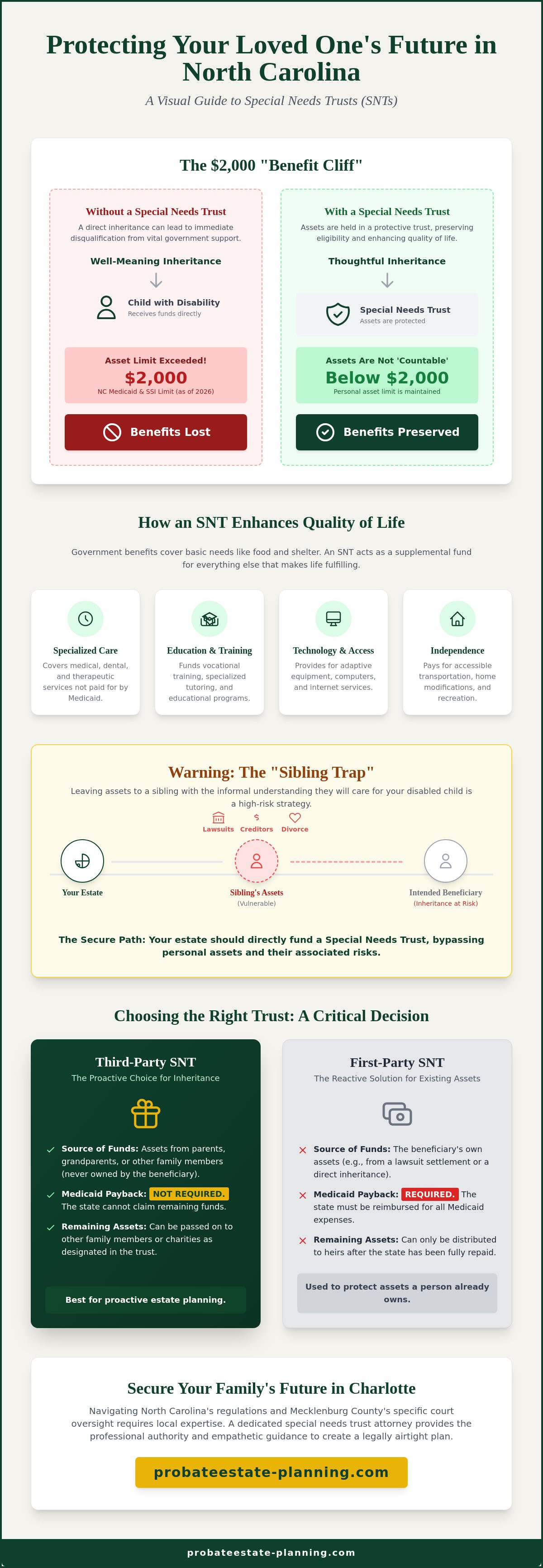
- Learn how to avoid the "benefit cliff" where a direct inheritance can unintentionally disqualify your loved one from essential North Carolina Medicaid and SSI benefits.
- Distinguish between Third-Party and First-Party trusts to ensure your family's financial structure provides the maximum protection for your child's future.
- Discover why partnering with a special needs trust attorney charlotte nc is vital for navigating Mecklenburg County's specific court oversight and local Innovation Waivers.
- Understand the legal risks of the "sibling trap" and why leaving assets to other family members can expose your child's inheritance to external creditors or lawsuits.
- Follow a methodical process for selecting reliable trustees and inventorying assets to build a functional, long-term care roadmap.
What is a Special Needs Trust (SNT) and Why is it Essential in Charlotte?
A Special Needs Trust (SNT) is more than just a legal document; it's a protective shield for your family's future. To answer the fundamental question, What is a Special Needs Trust, it is a legal instrument designed to hold assets for a person with disabilities without disqualifying them from government aid. In Charlotte, this tool is vital because the Social Security Administration (SSA) and the North Carolina Department of Health and Human Services (NC DHHS) monitor beneficiary assets with extreme precision. If a loved one receives an inheritance directly, they may hit the 'benefit cliff,' losing access to Medicaid and Supplemental Security Income (SSI) almost overnight.
A standard revocable living trust often fails here because it doesn't contain the specific restrictive language required by federal and state law. Without these protections, the state views trust assets as 'countable,' which can lead to a total loss of support. For families in Mecklenburg County, the process also involves the Clerk of Superior Court, who maintains oversight over guardianship and trust administration. Working with a dedicated special needs trust attorney charlotte nc ensures that your planning satisfies both local court expectations and complex state regulations.
To better understand this concept, watch this helpful video:
Understanding the $2,000 Asset Limit in North Carolina
In 2026, the resource limit for an individual receiving SSI in North Carolina remains at a strict $2,000. NC Medicaid evaluates 'countable resources' similarly, looking at bank accounts, stocks, and even certain types of life insurance. Many families fall into the 'spend-down' trap, where they are forced to quickly exhaust an inheritance on any available expense just to maintain eligibility. This is a reactive strategy that leaves your loved one with nothing for future emergencies. Consulting a special needs trust attorney charlotte nc helps you avoid these reactive pitfalls by creating a structured roadmap for asset management.
How an SNT Acts as a 'Supplemental' Fund
Government benefits are designed to cover the bare essentials, such as basic food and shelter. An SNT fills the gap by providing for 'quality of life' enhancements that the government simply doesn't fund. This might include specialized physical therapy, customized wheelchairs, or even simple joys like travel and entertainment. These funds ensure your child isn't just surviving, but thriving in their community.
- Specialized Care: Medical and dental procedures not covered by Medicaid.
- Education: Vocational training or specialized tutoring.
- Technology: Electronic equipment and internet services for communication.
- Independence: Home modifications for accessibility and private transportation.
Supplemental needs are those items and services the government does not provide but which make life worth living.
Types of Special Needs Trusts: Which One Fits Your Family?
Selecting the right legal structure is a defining moment in your planning process. While the fundamental goal of a Special Needs Trust (SNT) is to protect eligibility for essential benefits, the specific rules vary based on where the money comes from. The path you choose today will determine how the funds are managed, what they can be spent on, and who receives the remaining balance in the future. It's a decision that requires both technical precision and a deep understanding of your family's long-term goals.
Third-Party SNTs: Planning for the Future
This is the gold standard for families who want to leave an inheritance for a child or grandchild. Since the assets are provided by someone other than the beneficiary, these trusts offer the greatest flexibility and protection. A significant advantage is that North Carolina does not require a Medicaid payback provision for these accounts. When your loved one passes away, you have the freedom to name remainder beneficiaries, ensuring that any leftover funds stay within the family. Many Charlotte families choose to fund these trusts through several common sources:
- Life Insurance Policies: Providing a significant lump sum upon a parent's passing.
- Retirement Accounts: Directing 401(k) or IRA assets into the trust.
- Family Wills: Ensuring that grandparents and other relatives don't accidentally leave money directly to the beneficiary.
First-Party SNTs and the Medicaid Payback Rule
There are times when the person with a disability receives their own funds directly. This might happen through a personal injury award, a direct inheritance from a relative who didn't plan ahead, or a large back-payment from Social Security. In these cases, a First-Party SNT is required. These trusts must follow the "sole benefit" rule, which means every dollar spent must directly benefit the person with the disability. The most critical distinction here is the mandatory Medicaid payback. Upon the beneficiary's death, the trust must first reimburse the State of North Carolina for all medical assistance paid on their behalf. Only after the state is repaid can any remaining funds be distributed to other heirs.
Pooled trusts provide an alternative for those seeking a more affordable management option. These are run by non-profit organizations that combine the assets of many individuals for investment purposes. It is helpful to recognize that Session Law 2025-24 recently eliminated the Medicaid transfer penalty for individuals aged 65 and older who fund a pooled special needs trust in North Carolina. This change offers a new layer of security for seniors who may need to qualify for long-term care. A thoughtful estate planning strategy ensures you aren't caught off guard by these evolving regulations.
The technical details of these documents are complex, and the stakes for your family are high. One misplaced sentence can trigger a loss of benefits that takes months to resolve. Working with a special needs trust attorney charlotte nc gives you the quiet confidence that your plan is both legally sound and tailored to your family's specific needs. It's about moving toward a secure and predictable outcome for the person you love most.
The 'Sibling Trap': Why Leaving Assets to a Brother or Sister is a Mistake
It's a common sentiment among parents in North Carolina: "I'll just leave my estate to my other children; they'll know how to take care of their brother or sister." This approach often stems from a place of deep trust and a desire to avoid legal complexity. However, this "informal trust" is one of the most dangerous gambles you can make with your family's future. When you leave assets directly to a non-disabled child with the expectation that they'll provide for their sibling, you are creating a legal environment where the intended beneficiary has zero rights to those funds. Legally, the money belongs entirely to the sibling you named in your will.
This reality exposes the inheritance to three major risks that are entirely out of your control. First, if your non-disabled child faces a lawsuit, a car accident claim, or a bankruptcy, the funds intended for your disabled loved one are considered personal assets. They can be seized by creditors to pay off debts. Second, if that sibling goes through a divorce, those funds may be scrutinized during the division of marital property, potentially resulting in half of the "special needs fund" going to an ex-spouse. Finally, if the sibling passes away unexpectedly, the money will follow their own estate plan or state law. It could end up with a spouse or distant relatives, leaving your disabled child with no financial support. A special needs trust attorney charlotte nccan help you build a structure that keeps these assets separate and protected from such external threats.
The Emotional Burden of Informal Management
Beyond the legal risks, informal arrangements place a staggering emotional weight on your children. Without a formal document, the caregiver sibling must decide every day what is a "fair" amount to spend. This often leads to internal guilt or external resentment from other family members who might disagree with those financial choices. It's a recipe for fractured relationships. By establishing a formal Third-Party SNT, you provide a clear legal framework and specific instructions. This removes the "guesswork" and allows the sibling relationship to remain focused on love and support rather than financial policing.
Trustee vs. Caregiver: Defining the Roles
Many parents don't realize that the person managing the money doesn't have to be the person providing the daily care. In fact, separating these roles is often the healthiest choice for the family. You can appoint a professional co-trustee, such as a bank or a specialized trust company, to handle the complex tax filings and investment duties. This leaves the sibling free to serve as a guardian or advocate, focusing on their loved one's well-being without the stress of accounting. A formal trust ensures the sibling can be a brother or sister, not just an accountant. Consulting a special needs trust attorney charlotte nc allows you to tailor these roles to the unique strengths of your family members, ensuring a sustainable and peaceful long-term care plan.
The Planning Process: Creating a Roadmap for Care in Charlotte
Building a secure future for a loved one with a disability requires a methodical, step-by-step approach. It isn't enough to simply sign a document; you must create a functional ecosystem that adapts as your child's needs and North Carolina's regulations evolve. The process begins with a thorough inventory of your assets, identifying which funds, such as life insurance or retirement accounts, will eventually flow into the trust. Once you've identified the resources, you'll move to the critical task of selecting a trustee who possesses both the financial acumen and the empathy required for long-term management.
Working with a special needs trust attorney charlotte nc allows you to draft a precise legal agreement that stands up to the scrutiny of the Social Security Administration. This document must be carefully coordinated with your entire estate plan, including your Last Will and Testament and Durable Power of Attorney, to ensure no assets accidentally bypass the trust. If you're ready to begin this journey, a comprehensive estate plan is the first step toward lasting security. This holistic approach prevents the procedural obstacles that often lead to temporal delays in benefit approval.
Selecting the Right Trustee for a Charlotte SNT
The trustee is the gatekeeper of your child's quality of life. This individual or entity must have a high level of financial literacy and a deep understanding of NC Medicaid and SSI reporting requirements. In Mecklenburg County, many families with larger estates choose to appoint a corporate trustee to handle the complex tax filings and investment duties. However, a professional trustee should ideally work alongside a family member who understands the beneficiary's personal needs. This partnership ensures that the trust remains human-centric while maintaining the meticulous attention to detail required to preserve government benefits.
Drafting the Letter of Intent: The Non-Legal Essential
While the trust agreement provides the legal "bones" of your plan, the Letter of Intent provides the "heart." This document is not a formal legal contract, but it's arguably the most important piece of information you'll leave behind. It should detail your child's daily routines, medical history, dietary preferences, and social goals. It tells future caregivers what makes your child happy, what causes them distress, and what your specific hopes are for their future. The Letter of Intent is the voice of the parent that speaks to future caregivers. By documenting these nuances now, you ensure that the transition of care is as seamless and calming as possible for your loved one.
- Daily Routines: Morning and evening habits that provide comfort.
- Medical Contacts: A list of trusted doctors, therapists, and specialists in the Charlotte area.
- Social Interests: Favorite community activities, hobbies, and friendships to maintain.
- Dietary Needs: Specific allergies, preferences, or nutritional requirements.
This roadmap transforms a daunting professional landscape into a manageable path forward. It provides you with the quiet confidence that you've navigated the complexities of the law to steer your family toward a predictable and secure outcome.
Why You Need a Local Charlotte Attorney for Special Needs Planning
Planning for a loved one with a disability isn't just about following federal law; it's about understanding how those laws are applied right here in Mecklenburg County. The Clerk of Superior Court's office has specific procedural expectations regarding trust oversight and guardianship that can be difficult to navigate without experience. A local special needs trust attorney charlotte nc understands these nuances and can help you avoid the procedural obstacles that often lead to frustrating delays. This regional expertise ensures that your trust is not only legally sound but also functionally reliable within our local court system.
North Carolina offers unique support through Medicaid Innovation Waivers and programs such as CAP/C or CAP/DA. These programs provide essential community-based services that allow individuals to live more independently, but they often come with long waitlists and strict eligibility requirements. We maintain a deep familiarity with the regional provider landscape and coordinate with local non-profits like InReach and the Arc of Mecklenburg County. This local connection allows us to act as a steady guide, helping you identify the resources your child needs to maintain a high quality of life within the Charlotte community.
Navigating Mecklenburg County Guardianship
Guardianship and special needs trusts often work together to provide a complete safety net. If your loved one is unable to make their own decisions upon reaching adulthood, a competency hearing in Charlotte is usually required to appoint a guardian. This process involves the Clerk of Court and requires a clear demonstration that the individual needs protection. A local attorney streamlines these proceedings by preparing you for the hearing and managing the meticulous annual reporting requirements that follow. We ensure that the Clerk's office receives accurate accountings, which prevents the state from questioning the trust's "sole benefit" status.
The Probate & Estate Planning Co. Difference
Our approach is grounded in the belief that we aren't just drafting documents; we are building a protective shield for your family's future. We prioritize your emotional well-being alongside your formal security by moving away from cold, clinical technicalities toward a more human-centric stance. We integrate specialized techniques like Medicaid crisis planning with our trust designs to ensure your loved one is protected from every possible angle. You can learn more about our Probate Administration services to see how we manage complex legal transitions with wisdom and care.
We offer more than just a service; we offer a partnership in long-term management. Our practice has navigated these complexities many times and knows exactly how to steer you toward a secure and predictable outcome. We invite you to take the next step in safeguarding your child's inheritance and preserving their most important interpersonal connections. Schedule a consultation with a Charlotte special needs trust attorney today to begin creating a roadmap that offers true peace of mind.
Taking the First Step Toward Lasting Security
Safeguarding a loved one's future is a profound act of responsibility that requires both technical precision and deep compassion. You've learned how a carefully structured trust prevents the "benefit cliff" caused by North Carolina's strict asset limits while avoiding the legal risks of informal sibling arrangements. By formalizing your wishes through a Letter of Intent and selecting the right trustee, you transform a complex legal process into a functional roadmap for lifelong care.
At The Probate & Estate Planning Co., we provide specialized expertise in NC Medicaid crisis planning and a human-centric approach to sensitive estate transitions. We serve Charlotte and Mecklenburg County with the serious, protective guidance your family deserves. Partnering with an experienced special needs trust attorney charlotte nc ensures your planning is grounded in wisdom rather than reactive guesswork. It's about preserving your child's quality of life and your own peace of mind.
Secure your loved one's future with a consultation at The Probate & Estate Planning Co.
You don't have to navigate these sensitive transitions alone. We're here to help you build a safety net that honors your family's most important connections and provides the predictable outcome you've been seeking.
Frequently Asked Questions
Can I set up a special needs trust myself using online forms?
While online templates are available, they often lack the specific restrictive language required by the North Carolina DHHS and the Social Security Administration. A special needs trust attorney charlotte nc ensures your document accounts for local Mecklenburg County court procedures and the "sole benefit" rule. A single error in a generic form can lead to an immediate loss of Medicaid or SSI benefits, which is often more costly to rectify than the initial professional setup.
What happens to the money in a special needs trust when the beneficiary dies?
The distribution of remaining funds depends on the specific type of trust you choose. In a Third-Party SNT, you have the freedom to name other family members or charities as remainder beneficiaries without any state reimbursement. Conversely, a First-Party SNT requires a Medicaid payback provision, meaning the trust must first reimburse the State of North Carolina for medical expenses paid during the beneficiary's lifetime before any other heirs receive funds.
Does a special needs trust affect my child's ability to live in a group home?
A properly drafted trust won't disqualify your child from residential programs or group home placements. Instead, the trust serves as a supplemental resource to provide for items the facility doesn't cover, such as private furniture, specialized clothing, or personal entertainment. It ensures your loved one maintains a high quality of life while their essential housing and medical needs continue to be met by government programs.
Can an SNT be used to buy a house or a modified vehicle for the beneficiary?
Yes, the trust can purchase and own a home or a modified vehicle for the "sole benefit" of the beneficiary. However, you should consult with a special needs trust attorney charlotte ncregarding how these purchases are structured. For instance, if the trust pays for housing-related expenses directly, the beneficiary's Supplemental Security Income (SSI) check may be reduced by approximately $351 per month in 2026.
How much money do I need to start a special needs trust?
There is no legal minimum amount required to establish a trust, but it's important to consider the ongoing administrative and tax preparation costs. For smaller amounts, an NC ABLE account or a pooled trust might be more financially practical. We typically evaluate your family's total asset inventory to determine if the long-term benefits of a standalone trust justify the initial and annual maintenance fees.
Is an ABLE account the same thing as a special needs trust?
They are different financial tools that often work best when used together. An NC ABLE account allows for tax-free growth with a 2026 annual contribution limit of $20,000, but it has strict rules regarding Medicaid recovery at death. A special needs trust has no contribution limits and can hold significant assets like real estate or large life insurance payouts, providing more flexibility for comprehensive estate planning.
Who can serve as a trustee for a special needs trust in North Carolina?
Any competent adult or a corporate entity, such as a bank or specialized trust company, can serve as a trustee. Many families in Charlotte appoint a professional co-trustee to handle the complex accounting and annual reporting required by the Mecklenburg County Clerk of Superior Court. This allows a sibling or close relative to focus on the beneficiary's personal advocacy without the stress of managing technical financial compliance.
Can I change a special needs trust once it is established?
Most special needs trusts are irrevocable, which is a requirement to ensure the assets aren't counted toward the $2,000 individual Medicaid resource limit. While they're designed to be permanent, the North Carolina Uniform Trust Decanting Act may allow a trustee to modify certain terms without a court proceeding. This is often used to update a trust's language to comply with new state or federal regulations that affect benefit eligibility.
Comments
There are no comments for this post. Be the first and Add your Comment below.
Leave a Comment