
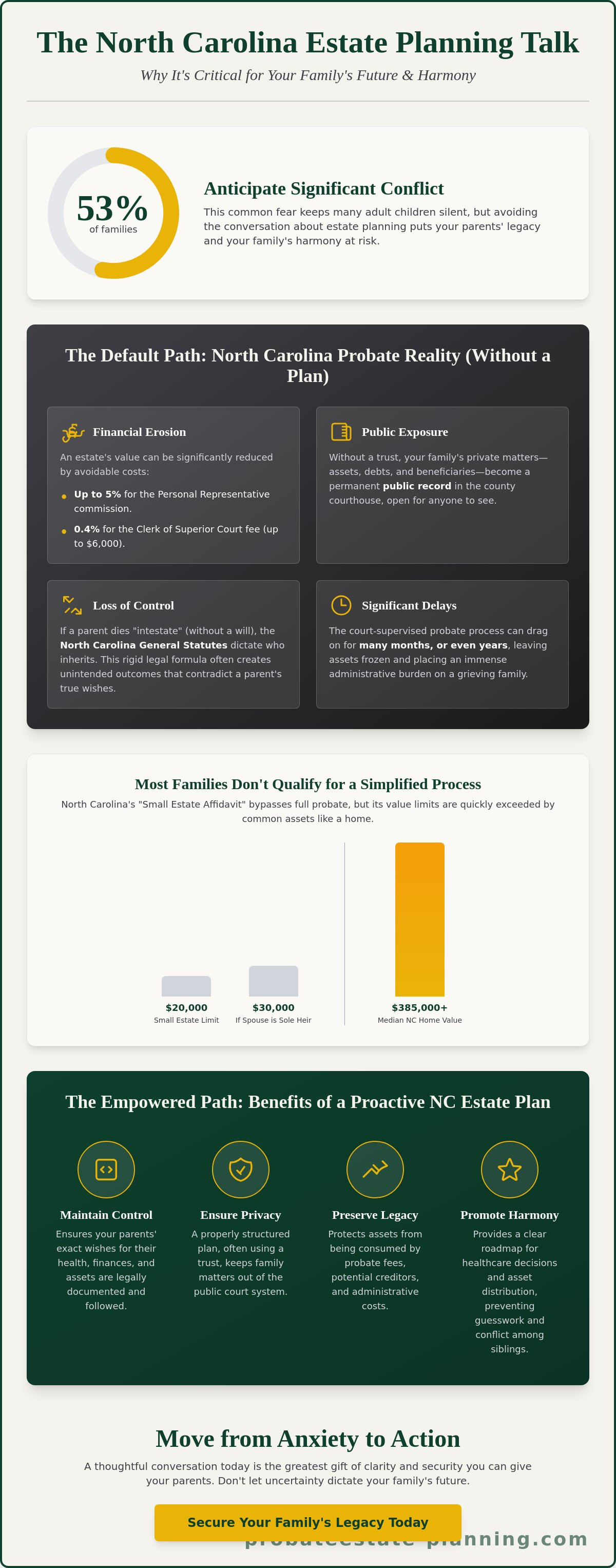
Did you know that 53% of families anticipate significant conflict or confusion during the transfer of wealth? This statistic reflects a common fear that keeps many adult children silent, even when they know their parents' future is at stake. You likely want to honor your parents' legacy, yet the fear of causing tension makes it difficult to begin. Learning how to talk to aging parents about estate planning in NC isn't about seeking an inheritance; it's about stewardship and preventing the chaos that often follows an unplanned estate.
We understand the weight of this responsibility and are here to help you move from anxiety to action. In this guide, you'll master the delicate art of discussing end-of-life planning while ensuring your parents' legal and financial security. We'll walk you through the essential North Carolina requirements, including the 2026 rules for electronic will storage and the 0.4% clerk of court probate fee. By the end, you'll have a clear list of NC-compliant documents and the confidence to lead a peaceful, productive conversation that protects your family's home and harmony.
Key Takeaways
- Learn how to talk to aging parents about estate planning in NC by using gentle, advice-seeking strategies that prioritize their legacy over financial details.
- Understand the North Carolina probate reality to help your parents protect their assets from unnecessary public disclosure and court delays.
- Identify the essential NC-compliant documents, such as the Durable Power of Attorney, that ensure your parents' wishes are respected by local financial institutions.
- Discover how to address common fears about cost and loss of control by explaining revocable planning options available under North Carolina law.
- Get a step-by-step roadmap for gathering property deeds and legal records to transition smoothly from an initial conversation to a secure, finalized plan.
Why the 'Estate Planning Talk' is Critical for North Carolina Families
In North Carolina, estate planning is not just about drafting a document; it's a comprehensive strategy for life and legacy. Many families delay this discussion because it feels heavy, but understanding What is Estate Planning? reveals it's actually a gift of clarity. Learning how to talk to aging parents about estate planning in NC allows you to move beyond the fear of death and focus on the preservation of their values and assets. Without a proactive plan, your family's private matters become public record through the North Carolina probate court.
The "NC Probate Reality" can be a harsh wake-up call for those left behind. If a parent passes away without a valid plan, the estate enters a slow, court-supervised process. In North Carolina, the Clerk of Superior Court charges a fee of 0.4% of the probate assets, which can reach a maximum of $6,000. When you add the personal representative commission, which can be up to 5% of the estate's receipts, the financial erosion is significant. These costs, combined with months of court delays, can place an immense burden on grieving family members.
To better understand this concept, watch this helpful video:
Waiting until a crisis occurs is a risky gamble. Effective January 1, 2026, North Carolina law allows attorneys to store attested wills electronically, reflecting a shift toward modernization. However, if your parents die "intestate" (without a will), North Carolina General Statutes, not your family's wishes, dictate who receives the family home and bank accounts. This rigid legal formula often leads to results that parents never intended, such as assets being split between a spouse and distant relatives in ways that create long-term financial instability.
The Emotional Stakes: Preserving Family Harmony
A lack of clear direction is the primary fuel for fiduciary litigation in North Carolina courts. When siblings are forced to guess a parent's medical wishes during a healthcare crisis, or argue over the intent behind an old bank account, relationships often fracture permanently. By learning how to talk to aging parents about estate planning in NC now, you transform a potentially volatile situation into an act of empowerment. It shifts the focus from "who gets what" to ensuring your parents maintain control over their care and their story.
The Financial Stakes: Protecting the NC Legacy
Many parents rely on "simple wills" signed decades ago. These documents often fail to account for current NC General Statutes or the "Elective Share" rules that protect surviving spouses. While North Carolina allows a simplified "small estate affidavit" for personal property valued at $20,000 or less ($30,000 if a spouse is the sole heir), most families have assets that exceed these limits. A robust plan is the only way to bypass the public nature of probate and ensure the legacy they worked a lifetime to build isn't consumed by avoidable court costs and administrative delays.
5 Practical Ways to Start the Conversation in North Carolina
Starting this dialogue often feels like the hardest part of the process. You don't want to seem greedy or morbid, and you certainly don't want to spark defensiveness. However, statistics show a significant gap in family communication; while 87% of families report having some conversation about future plans, only 32% have discussed these plans in detail. Bridging that gap requires a gentle, strategic entry that prioritizes your parents' comfort and legacy.
One effective method is the "Life Event" entry. You might mention a recent news story or a friend currently struggling with North Carolina's probate process after a parent passed. This reframes the topic as a shared problem to solve rather than a personal interrogation. Alternatively, try the "Ask for Advice" strategy. Asking how they handled their own parents' affairs years ago honors their experience. It allows them to share what worked and what didn't, naturally leading to a discussion about their current wishes.
If you've recently signed your own documents, use the "Update" angle. Explain that you wanted to ensure your own children were protected and ask if they've reviewed their documents since the 2026 changes to electronic will storage laws. For parents concerned about the family home, the "Financial Security" approach works best. Frame it as a way to protect their hard-earned assets from being consumed by long-term care costs. Finally, the "Legacy" hook focuses on what matters most to them, such as preserving North Carolina family land or specific heirlooms for the next generation.
Choosing the Right Time and NC Setting
Timing is everything. Avoid high-stress holidays like Thanksgiving or Christmas. These are meant for celebration, and a heavy legal talk can feel like an ambush. Instead, choose a neutral, quiet Tuesday afternoon when everyone is well-rested. Set a 20-minute limit for the first talk. Remember, learning how to talk to aging parents about estate planning in NC is a marathon. A series of small, calm chats is far more effective than one long, exhausting intervention that leaves everyone drained.
NC-Specific Scripts You Can Use Today
For the parent who values privacy, try this: "I want to make sure your business stays private. Did you know a revocable trust keeps your assets out of public court records?" If they are fiercely independent, focus on autonomy: "A Power of Attorney ensures you choose who helps you if you're ever sick, rather than letting a judge decide in a guardianship hearing." For those with deep local roots, say: "I want to ensure this family land stays exactly as you want it for your grandkids." If you're unsure how to phrase these legal needs, you can consult with a specialist in NC law to find the right words.
Essential NC Legal Documents to Discuss with Aging Parents
Once you've opened the door to conversation, the focus shifts to the specific legal tools that safeguard a legacy. A primary goal when learning how to talk to aging parents about estate planning in NC is ensuring their documents meet current state standards. For example, a North Carolina Durable Power of Attorney must comply with the Uniform Power of Attorney Act. This compliance is vital because NC banks often refuse to honor older or out-of-state documents that don't match the specific language required by our current statutes. Without a recognized document, you might find yourself locked out of the accounts needed to pay for your parents' care.
Many families mistakenly believe a Last Will and Testament avoids the court system. While a Will is a foundational piece of any plan, it actually serves as the primary ticket into the North Carolina estate administration process. To truly bypass the delays and costs of probate, a Revocable Living Trust is often the superior choice. Additionally, you must address Medicaid crisis planning. North Carolina currently enforces a 60-month "look-back" period for long-term care assistance. If your parents wait until they need a nursing home to transfer assets, they may face significant penalties that put the family home at risk.
The Power of the NC Revocable Living Trust
A trust offers a level of protection that a simple Will cannot match. If a parent becomes incapacitated, a successor trustee can step in immediately to manage assets without waiting for a court-ordered guardianship. Privacy is another major benefit. Because North Carolina probate files are public records, anyone can view your parents' financial details and beneficiary lists. A trust remains private, keeping the family's business behind closed doors. This tool also simplifies life for families with property in multiple states, allowing you to manage a North Carolina residence and a South Carolina vacation home under one unified plan.
Financial and Healthcare Directives in NC
North Carolina law provides specific frameworks for medical decision-making. You should discuss the role of the "Health Care Agent" who will advocate for their wishes if they're unable to speak for themselves. It's important to distinguish an NC Living Will from a Do Not Resuscitate (DNR) order. A Living Will is a legal declaration of a desire for a natural death in specific end-of-life scenarios, while a DNR is a medical order for immediate life-saving measures. Finally, ensure your parents sign HIPAA authorizations. These forms allow North Carolina doctors to share vital health information with you, preventing a communication blackout during a medical crisis.
Handling Objections and NC-Specific Roadblocks
Even with a gentle approach, you may encounter resistance. It's natural for parents to feel defensive when discussing their mortality or finances. One common objection is the belief that they don't have enough money to justify a formal plan. In North Carolina, however, even modest estates are subject to the 0.4% probate fee and the rigid rules of intestacy. Without a plan, the state's default formula decides asset distribution, which often contradicts a parent's true wishes. Remind them that planning isn't about the size of the bank account; it's about making sure their hard-earned legacy stays within the family rather than being consumed by court costs.
Fear of losing control is another significant hurdle. Many parents worry that signing legal documents means handing over their independence today. You can alleviate this anxiety by explaining that North Carolina law allows for revocable plans. A revocable living trust or a power of attorney can be modified or canceled as long as they have the mental capacity to do so. This maintains their autonomy while providing a safety net for the future. If the "greedy child" stigma arises, pivot the focus entirely to their well-being. Frame the conversation around ensuring they have the highest quality of care and that their medical wishes are honored during a crisis.
The 'Third-Party' Strategy: Involving NC Professionals
Sometimes, the best way to move forward is to step back. Using a neutral third party can diffuse family tension, especially if siblings in Charlotte or Raleigh disagree on the best path forward. An experienced estate planning attorney can act as the "bad guy," delivering hard truths about the 60-month Medicaid look-back period or the strictness of NC bank requirements. A professional consultation often uncovers Medicaid eligibility paths that families didn't know existed, such as protecting the family home through specific trust structures. Involving a CPA or financial advisor further validates the need for a plan, shifting the weight of the decision from a family "intervention" to a standard financial best practice.
When the Situation Becomes a Crisis
If you notice signs of cognitive decline or sudden health shifts, the window for standard planning is closing. Waiting too long can force a family into North Carolina guardianship proceedings. These "incompetency" hearings are public, expensive, and can feel deeply undignified for the parent. To avoid this, you must act while they still have the legal capacity to sign documents. If an NC parent needs immediate long-term care and has no plan, you are in a Medicaid crisis. In these moments, swift action is required to restructure assets legally and qualify for assistance without losing everything. To protect your parents' autonomy and assets before a crisis hits, schedule a consultation with our NC legal team today.
Next Steps: Transitioning from Talk to Execution in NC
Once you've navigated the initial hurdles of how to talk to aging parents about estate planning in NC, the focus shifts toward concrete action. Moving from a conversation to a legally binding plan requires gathering the right information to ensure nothing is left to chance. You should start by collecting existing records, such as older wills, life insurance policies, and deeds for any North Carolina real estate. These documents serve as the blueprint for your parents' current standing and help identify any gaps that could lead to complications in the probate court later.
It's vital to partner with a specialist who understands the nuances of North Carolina estate law. While a general practice attorney might handle a variety of cases, a firm focused on probate and estate planning ensures that your parents' documents comply with the latest state mandates, including the 2026 electronic will storage regulations. During the review process, pay close attention to signing formalities. In North Carolina, a health care power of attorney and a living will require the signature of the principal in the presence of two qualified witnesses and a notary public. Missing these specific procedural steps can render a document invalid when it is needed most.
What to Bring to Your First NC Legal Consultation
Preparation is the key to a productive first meeting. To make the most of your time with a legal advisor, you should arrive with a clear picture of your parents' world. This doesn't mean you need a perfect balance sheet, but you should have a foundational list of assets and people. Consider bringing the following:
- A basic inventory of assets, specifically noting North Carolina bank accounts, retirement funds, and real estate holdings.
- Full legal names and contact information for proposed executors, trustees, and healthcare agents.
- A list of "What If" questions tailored to your family dynamics, such as how to handle siblings living out of state or concerns about a specific heir's financial stability.
The Peace of Mind Guarantee
Finalizing an estate plan does more than just organize paperwork; it fundamentally changes the family dynamic. The heavy cloud of "what if" is replaced by a sense of quiet confidence and preparedness. You're no longer guessing what your parents would want; you're following a roadmap they created. This stewardship ensures that the family legacy is protected from avoidable taxes and the 0.4% NC probate fee, preserving more for the people and causes they love. Establishing a partnership with a dedicated firm provides a safety net for future updates as life and laws inevitably change. Schedule a consultation with our North Carolina estate planning team to start the journey today.
Securing Your Family Legacy Through Proactive Stewardship
Learning how to talk to aging parents about estate planning in NC is the first step toward a future defined by harmony rather than chaos. You now have the strategies to initiate these discussions with empathy and the knowledge of which North Carolina legal documents are essential for protection. By addressing these matters now, you prevent the public exposure of probate and ensure that your parents' wishes are handled with the dignity they deserve.
Our firm provides specialized expertise in North Carolina Medicaid Crisis Planning and manages estates for families spread across NC, SC, MD, and TN. We focus on creating functional plans that shield your family from the stress of court-ordered guardianship or unnecessary legal delays. Secure your parents' future with a professional NC Estate Plan review and gain the peace of mind that comes with a protected legacy. You've taken the hardest step by starting the conversation; now, let us help you finish the journey with confidence.
Frequently Asked Questions
What happens if my parents live in NC but I live in another state?
You can still serve as an executor or power of attorney from another state, but North Carolina law requires a non-resident executor to appoint a resident process agent. This agent serves as a local point of contact for the court to deliver legal notices. While technology allows you to manage many affairs remotely, having a local legal partner is essential to navigate the specific procedural rules of the Clerk of Superior Court in the county where your parents reside.
Is a DIY will from the internet valid in North Carolina?
A DIY will is only valid if it strictly adheres to North Carolina's execution formalities, which include specific witness and notarization requirements. Many generic online templates fail to account for the nuances of NC General Statutes, which can lead to the document being rejected during the probate process. While these forms seem cost-effective initially, a faulty document often results in significant legal fees for your family to correct the errors through court intervention later.
How much does the average estate plan cost for aging parents in NC?
Costs vary depending on the complexity of the family's assets, but you should consider the mandatory 0.4% probate fee that applies to estates settled via a will. For an estate with $1,000,000 in assets, this court fee alone would be $4,000. A comprehensive plan involving a trust may require a higher upfront investment, but it often saves the family thousands in court costs and executor commissions, which can reach 5% of the estate's value.
Can I be my parent's Power of Attorney and Executor at the same time in NC?
Yes, it's common and often practical for one person to hold both roles to ensure continuity in management. Your authority as Power of Attorney is active while your parent is alive but unable to make decisions, and it ends immediately upon their death. At that point, your role as Executor begins once the court issues Letters Testamentary. Understanding how to talk to aging parents about estate planning in NC helps clarify who is best prepared for these distinct responsibilities.
What is the NC '5-year look-back' for Medicaid, and why does it matter for the talk?
The 5-year look-back is a 60-month window where North Carolina Medicaid reviews all asset transfers to ensure property wasn't given away to meet eligibility limits. If your parents transferred assets for less than fair market value within those 60 months, they may face a penalty period where they are ineligible for assistance. Discussing this now is vital because waiting until a health crisis occurs often makes it too late to protect the family home or other significant assets.
What if my parent has already started showing signs of dementia in NC?
You can still complete an estate plan if your parent maintains "testamentary capacity," which means they understand their assets and who their family members are. A diagnosis of early-stage dementia doesn't automatically disqualify them from signing documents, but you must act quickly while they are still clear-headed. If they lose this capacity, you may be forced into a public and expensive North Carolina guardianship proceeding to gain the legal authority to manage their care and finances.
How do I find out if my parents already have a will in North Carolina?
You should start by checking their home filing systems, safe deposit boxes, or contacting their previous legal counsel. In North Carolina, wills are not usually filed with the court until after the individual passes away. However, as of January 1, 2026, attorneys may use electronic storage for attested wills. Knowing how to talk to aging parents about estate planning in NC includes asking for the location of these documents today so you aren't searching for them during an emergency.
Does North Carolina have an inheritance or estate tax in 2026?
No, North Carolina does not have a state-level inheritance or estate tax in 2026. You only need to be concerned about the federal estate tax exemption, which is $15 million per individual or $30 million for a married couple. While most families won't owe these taxes, they still face the 0.4% probate fee on assets passing through a will. This makes probate avoidance through trusts a primary financial goal for many North Carolina residents regardless of their tax status.
Comments
There are no comments for this post. Be the first and Add your Comment below.
Leave a Comment