

What if the person you hire to safeguard your family's future is actually the one putting it at risk? It's a heavy thought, but choosing the wrong partner for your legacy can lead to the very family conflict and tax burdens you're trying to avoid. Understanding the 3. Red Flags When Choosing an Estate Planning Lawyer is the first step in protecting what you've built. Whether you're dealing with Maryland's unique dual tax system or North Carolina's new electronic will statutes, you need a guide who sees the human story behind the legal documents.
You likely feel a deep responsibility to ensure your assets aren't lost to avoidable taxes or Medicaid costs, and you're right to be cautious. We promise to show you how to identify the warning signs that suggest a lawyer is treating your life's work as a mere transaction rather than a dynamic strategy. This article previews the specific indicators of a poor fit and explains how to find a steady, competent mentor who understands the nuances of laws across NC, SC, MD, and TN to ensure your long-term security.
Key Takeaways
- Understand why hiring a generalist who practices in unrelated fields can jeopardize the specialized protection your family assets require.
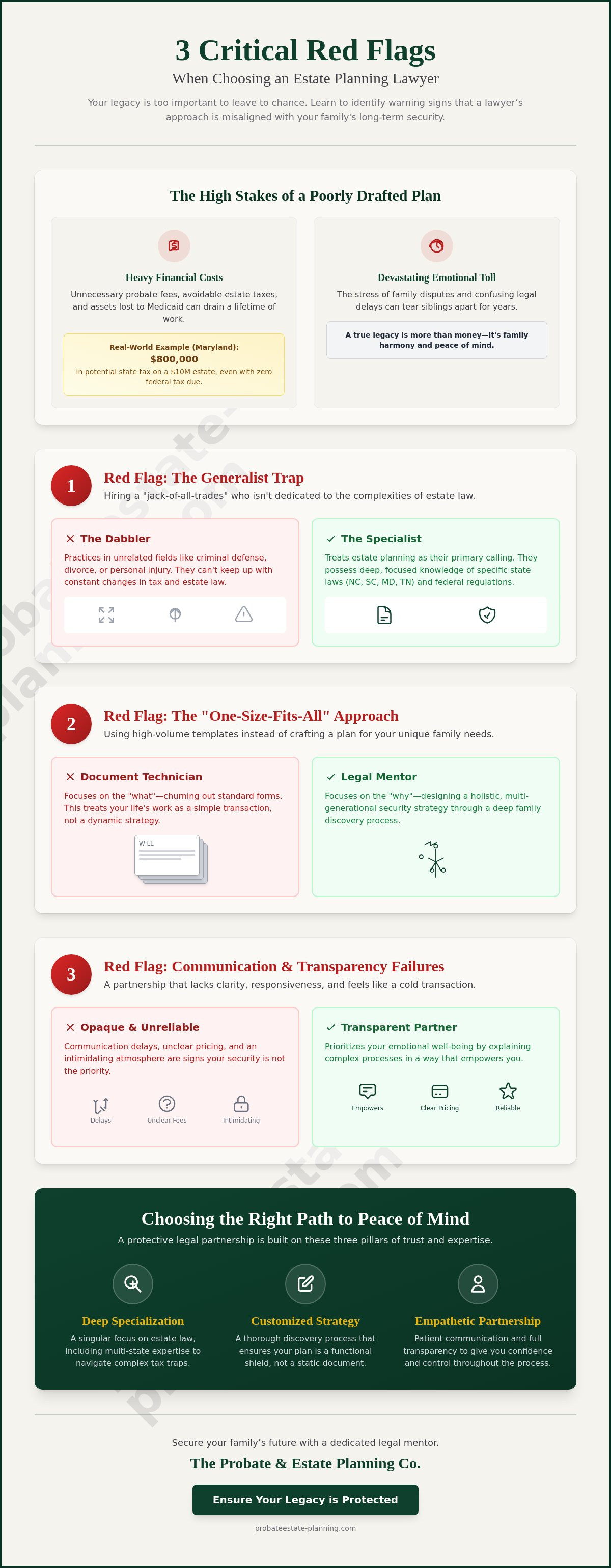
- Learn how to spot the 3. Red Flags When Choosing an Estate Planning Lawyer, starting with firms that prioritize high-volume templates over your unique family needs.
- Recognize how pricing opacity and communication delays serve as early warnings of a legal partnership that lacks transparency and reliability.
- Learn the importance of seeking a guide with multi-state expertise to navigate complex tax traps in Maryland or new electronic will laws in North Carolina.
- Discover how a thorough family discovery process ensures your plan is a functional shield for your loved ones rather than a static document.
The High Stakes of Legacy: Why Your Choice of Lawyer Matters
Your choice of legal counsel is the difference between a secure future and a chaotic probate process. When you begin this journey, you aren't just looking for a signature on a page. You're looking for a shield. A red flag is more than a minor annoyance; it's a signal that a lawyer's approach is misaligned with your family's security. If a professional ignores the nuances of your specific state laws, such as the unique inheritance taxes in Maryland or the updated spousal allowances in North Carolina, they risk leaving your heirs with a heavy emotional and financial burden. We define a red flag as any behavior or policy that suggests your security is secondary to the firm's bottom line.
To better understand how to select the right professional, watch this helpful video:
The financial cost of a poorly drafted plan often exceeds the initial savings of a bargain service. Unnecessary probate fees, avoidable estate taxes, and assets lost to Medicaid can drain a lifetime of hard work. For instance, an estate worth $10 million in Maryland might owe zero federal estate tax due to the $15 million exemption, yet still face a state tax bill of roughly $800,000. To ground yourself in the basics, it helps to understand What is Estate Planning? at its core: a comprehensive method to manage your assets during life and distribute them after death. Beyond the money, the emotional toll of family disputes and legal delays can tear siblings apart for years. Your legacy deserves more than a template.
The Difference Between Document Prep and Estate Strategy
A cheap Will is often the most expensive mistake a family can make. Document technicians focus on the "what," churning out standard forms that might not account for your specific family dynamics. In contrast, a legal mentor focuses on the "why." Holistic estate planning is a multi-generational security strategy that considers tax liability, asset protection, and the long-term well-being of your beneficiaries. If you notice the 3. Red Flags When Choosing an Estate Planning Lawyer, it's usually because the firm is prioritizing volume over your specific legacy.
Signs of a Protective Legal Partnership
A protective partnership feels different than a cold transaction. It's built on transparency and measured, patient communication. Your lawyer should prioritize your emotional well-being by explaining complex processes in a way that empowers you rather than intimidates you. Professional authority shouldn't feel like a barrier; it should feel like a steady hand guiding you through a storm. When a lawyer takes the time for deep discovery, they ensure your plan is functionally reliable for years to come. Recognizing the 3. Red Flags When Choosing an Estate Planning Lawyer early on ensures you find a partner who truly values your peace of mind.
Red Flag #1: The Generalist Trap and Lack of Specialization
Hiring a "jack-of-all-trades" lawyer is one of the most common mistakes families make. While a general practitioner might be excellent at handling a traffic ticket or a simple real estate closing, estate law requires a different level of precision. If a lawyer's website lists criminal defense, divorce law, or personal injury alongside their planning services, they aren't specialists. They're dabblers. This lack of focus is a major indicator of the 3. Red Flags When Choosing an Estate Planning Lawyer. You need a partner who understands how a single word in a trust can change your family's tax liability or Medicaid eligibility years down the road.
Specialization impacts your protection because laws are constantly shifting. A lawyer who spends their morning in family court and their afternoon in a criminal hearing likely isn't tracking the minute details of the "One Big Beautiful Bill Act" (OBBBA) or the 2026 federal exemption increases. When you are Finding an estate planning attorney, look for someone who treats this field as their primary calling. A focused Estate Planning firm provides the meticulous attention to detail your legacy requires, ensuring your documents don't just look professional but actually function when they are needed most.
Regional Nuances in NC, SC, MD, and TN
Legal requirements vary wildly across state lines. In 2026, Maryland remains the only state in the country to levy both an estate tax and an inheritance tax. Meanwhile, Tennessee offers a simplified probate process for small estates under $50,000. If you own property in both North Carolina and South Carolina, your lawyer must navigate NC's new electronic will statutes and SC's extended 360-year Rule Against Perpetuities. A generalist often misses these regional "traps," leading to delays and unnecessary costs for your heirs.
Continuing Education and Industry Involvement
The legal landscape changed significantly on January 1, 2026, when the federal estate tax exemption reached $15 million per individual. A lawyer who hasn't updated their strategy to reflect these permanent changes is a liability. Ask your prospective guide how they stay current with Medicaid and probate law shifts. Membership in specialized organizations suggests a commitment to excellence. If they can't explain how the 2026 North Carolina spousal allowance increase to $60,000 affects your specific plan, it's a sign they aren't the steady mentor you deserve. Identifying these 3. Red Flags When Choosing an Estate Planning Lawyer early protects your family from future complications.
Red Flag #2: The "One-Size-Fits-All" or Cookie-Cutter Approach
A "Will Mill" is a firm that prioritizes volume over value, treating your family's future like an assembly line product. You might walk out with a standard Revocable Living Trust that feels official but fails to address your specific family risks. If your lawyer doesn't ask deep questions about your children's financial habits, potential family conflicts, or your long-term health concerns, they aren't planning; they're just typing. This lack of curiosity is a critical component of the 3. Red Flags When Choosing an Estate Planning Lawyer. True security comes from a plan built around your life, not a template that fits everyone and protects no one.
When you are refining your process of finding an attorney, pay close attention to whether the counsel is listening or simply lecturing. A protective legal partner acts as a mentor who digs into the "what ifs" of your unique situation. If the consultation feels rushed or if the lawyer seems eager to push a standard package before understanding your assets, you're likely in a document mill. These firms often ignore the complexities of state-specific statutes, such as the 2025 South Carolina Rule Against Perpetuities extension, which can leave your long-term dynasty trust vulnerable to future legal challenges.
The Medicaid Planning Gap
Many generic estate plans contain a fatal flaw: they completely ignore the potential for a Medicaid crisis. A lawyer who tells you that you "have too much money for Medicaid" without conducting a thorough analysis is waving a massive red flag. Effective asset protection often requires the strategic use of an Irrevocable Trust, especially in Maryland and the Carolinas where nursing home costs can quickly deplete an estate. A generic plan fails to protect your home from Medicaid recovery, potentially leaving your heirs with nothing. Specialized Medicaid Crisis Planning is a proactive shield that ensures your spouse and children remain provided for, even if long-term care becomes necessary.
Customization vs. Automation
True legal wisdom is found in the clauses, not the title of the document. For example, a Durable Power of Attorney needs specific, custom-tailored language to be effective in 2026. If your lawyer provides a document that looks exactly like something you could have found online for free, they aren't providing the professional authority you're paying for. Your plan should include specific provisions for digital assets, tax-sensitive distributions, and healthcare directives that reflect your personal values. Identifying the 3. Red Flags When Choosing an Estate Planning Lawyer early allows you to pivot toward a partner who prioritizes functional reliability over administrative convenience.
Red Flag #3: Communication Failures and Lack of Transparency
Communication is the lifeblood of a protective legal relationship. If a firm takes more than 48 hours to return an initial inquiry, they're already failing the "Ghosting" test. This lack of responsiveness often signals deeper operational issues that could jeopardize your timeline. Pricing opacity is another major warning sign. If a lawyer says "I'll bill you later" or refuses to give a clear estimate for a Revocable Living Trust, they're prioritizing their billable hours over your financial peace of mind. Transparent pricing isn't just about money; it's about the respect and honesty you deserve from a legal partner.
Some professionals use technical jargon as a shield. They might throw around terms like "non-portable state exemptions" in Maryland or "wait-and-see vesting periods" in South Carolina without explaining the practical impact on your family. This is one of the 3. Red Flags When Choosing an Estate Planning Lawyer. If you leave a meeting feeling more confused than when you arrived, that lawyer isn't a mentor; they're a document technician. You deserve a clear roadmap for the probate or planning process so you always know exactly where your legacy stands. Without a step-by-step plan, you're left in a state of perpetual anxiety rather than proactive preparation.
The Consultation Scorecard: Spotting Signs in Real-Time
You can often spot 3. Red Flags When Choosing an Estate Planning Lawyer before you even sign a contract. Use this scorecard during your first meeting to evaluate the firm's fit for your family's needs:
- Observe the environment: Note how the staff treats you upon arrival. A firm that values clients will treat you with empathetic reassurance from the first phone call.
- Analyze the dialogue: Does the lawyer interrupt you or listen to your specific goals? A protective guide should spend more time listening to your family dynamics than talking about their own credentials.
- Demand fee clarity: Ask for a flat-fee vs. hourly breakdown for your plan. Flat fees for services like a Durable Power of Attorney or a Last Will and Testament provide the predictability you need to plan effectively.
The "Empathetic Reassurance" Test
A great estate planning lawyer must acknowledge the emotional weight of your decisions. If a professional treats your family's sensitive transitions like a simple math problem, they lack the human-centric stance required for effective Medicaid Crisis Planning. You aren't just moving numbers on a spreadsheet; you're safeguarding the people you love. A mentor-style lawyer understands that your emotional well-being is just as important as your formal security. If they don't show genuine concern for the interpersonal connections you're trying to preserve, they aren't the right partner for your long-term management.
Choosing The Probate & Estate Planning Co. for Peace of Mind
Identifying the 3. Red Flags When Choosing an Estate Planning Lawyer is only the first step. Finding a firm that actually listens to your story and values your legacy is the second. At The Probate & Estate Planning Co., we've built our practice on the pillars of specialized expertise and empathetic reassurance. We understand that your legacy isn't just a collection of assets; it's the result of a lifetime of hard work and deep interpersonal connections. While other firms might rush you through a template, we engage in deep family discovery sessions. This thorough process allows us to understand your family dynamics, ensuring that every Revocable Living Trust or Last Will and Testament we create is functionally reliable for the long term.
Our approach is intentionally human-centric and protective. We serve as a steady guide through the complexities of laws across North Carolina, South Carolina, Maryland, and Tennessee. Whether you're navigating the 2026 Maryland tax traps or the new electronic will statutes in North Carolina, our wisdom-driven team prioritizes your emotional well-being. We maintain transparent pricing and clear, instructional communication because we believe trust is earned through practical outcomes, not technical jargon. We offer a partnership in long-term management that moves away from cold, clinical preparation toward a more interpersonal, protective stance.
Our Integrated Approach to Asset Protection
We don't just draft documents; we build shields. By combining Asset Protection Planning with Medicaid Crisis Planning, we ensure your wealth stays within your family rather than being lost to long-term care costs. This multi-state perspective is essential for families with property across state lines, such as a primary home in Maryland and a vacation property in South Carolina. We understand that Maryland is the only state to levy both an estate and inheritance tax in 2026, and we plan accordingly to prevent future complications for your heirs. Learn more about our Probate Administration services to see how we manage the transition of assets with precision and care.
Take the First Step Toward a Secure Future
When you meet with our team, you won't find high-pressure tactics or confusing legal speak. You'll find a reliable mentor ready to offer a methodical, step-by-step solution to your anxieties. We've navigated these legal waters many times before and know exactly how to steer you toward a secure and predictable outcome. If you've been worried about the 3. Red Flags When Choosing an Estate Planning Lawyer, let us show you what a true partnership looks like. Our focus is on the prevention of future conflict and the preservation of your family's continuity. Schedule your consultation for an estate plan you can trust and begin the journey toward lasting peace of mind.
Secure Your Family's Future with Confidence
Protecting your life's work requires more than just a stack of papers; it requires a partnership built on trust and specialized wisdom. By recognizing the 3. Red Flags When Choosing an Estate Planning Lawyer, you've taken a vital step toward ensuring your assets aren't lost to avoidable taxes or Medicaid recovery. You now know that a true legal mentor avoids the "Will Mill" approach, offering instead a custom-tailored strategy that respects your unique family dynamics and regional laws across NC, SC, MD, and TN.
Our team provides the multi-state representation and specialized expertise in Medicaid Crisis Planning you need to navigate these transitions safely. We move away from clinical technicalities to focus on the human connections that matter most to you. It's time to replace anxiety with a methodical, step-by-step plan that offers genuine security for generations to come. Secure your legacy with a partner who prioritizes your peace of mind; contact The Probate & Estate Planning Co. today. You've worked hard to build your legacy, and we're here to help you protect it with the care and competence it deserves.
Frequently Asked Questions
How much should an estate planning lawyer cost in 2026?
Legal fees typically depend on the complexity of your family legacy and the specific protections your assets require. Most specialized firms offer flat-fee arrangements for comprehensive plans to provide you with financial predictability. You should expect a clear, written breakdown of costs during your initial consultation. This transparency ensures you aren't surprised by hidden administrative fees or unexpected hourly billing later in the planning process.
What is the difference between a generalist and an estate planning specialist?
A specialist focuses exclusively on safeguarding assets and navigating probate codes, while a generalist divides their attention among various unrelated legal fields. Specialists are more likely to track minute changes, such as the 2026 North Carolina electronic will storage updates. Choosing a focused mentor helps you avoid the 3. Red Flags When Choosing an Estate Planning Lawyer, ensuring your plan isn't a generic template that fails during a family crisis.
Can one lawyer handle my estate planning in both North Carolina and South Carolina?
Yes, provided the attorney is licensed in both jurisdictions and understands the specific statutes of each state. This is vital for families who own property across the border. For instance, your plan must reconcile North Carolina's $60,000 spousal allowance with South Carolina's 360-year Rule Against Perpetuities. A multi-state guide ensures your legacy remains cohesive and legally sound regardless of where your assets are located.
What questions should I ask during my first estate planning consultation?
You should ask about the lawyer's experience with Medicaid Crisis Planning and how they stay current with the 2026 tax law changes. Inquire about their process for deep family discovery and whether they offer flat-fee pricing for a Revocable Living Trust. These questions help you identify the 3. Red Flags When Choosing an Estate Planning Lawyer early, allowing you to find a partner who prioritizes your emotional well-being.
Is it a red flag if a lawyer only offers a Last Will and Testament?
It is a warning sign if a professional suggests a simple Will without analyzing your need for asset protection or probate avoidance. A Last Will and Testament is often just one piece of a functional strategy. If a lawyer ignores tools like an Irrevocable Trust or Medicaid planning, they may be operating a "Will Mill" that prioritizes document volume over your family's long-term safety and continuity.
How often should I hear from my estate planning attorney during the process?
You should receive regular updates at each major milestone of the planning or probate administration process. A steady guide will provide a clear roadmap and respond to your inquiries within one to two business days. If you experience long delays or "ghosting" early on, it's a signal that the firm lacks the meticulous attention to detail required to safeguard your most important interpersonal connections and future security.
Can an estate lawyer help with Medicaid planning if I'm already in a crisis?
Yes, specialized Medicaid Crisis Planning is designed specifically for families facing an immediate need for long-term care. A competent attorney can use legal tools to protect a significant portion of your assets even after a loved one has entered a nursing home. This process requires a deep understanding of state-specific look-back periods and asset transfer rules to prevent your family home and savings from being lost to rising care costs.
What happens if my lawyer didn't include a Durable Power of Attorney in my plan?
Without a Durable Power of Attorney, your family may be forced to pursue a costly and public guardianship proceeding if you become incapacitated. This document is a foundational pillar of any secure plan because it empowers a trusted person to manage your affairs. If this was omitted, your legacy is vulnerable to procedural obstacles and temporal delays that can cause immense stress for your loved ones during a sensitive transition.
Comments
There are no comments for this post. Be the first and Add your Comment below.
Leave a Comment